Kenrokuen Kanazawa Garden Architecture Guide
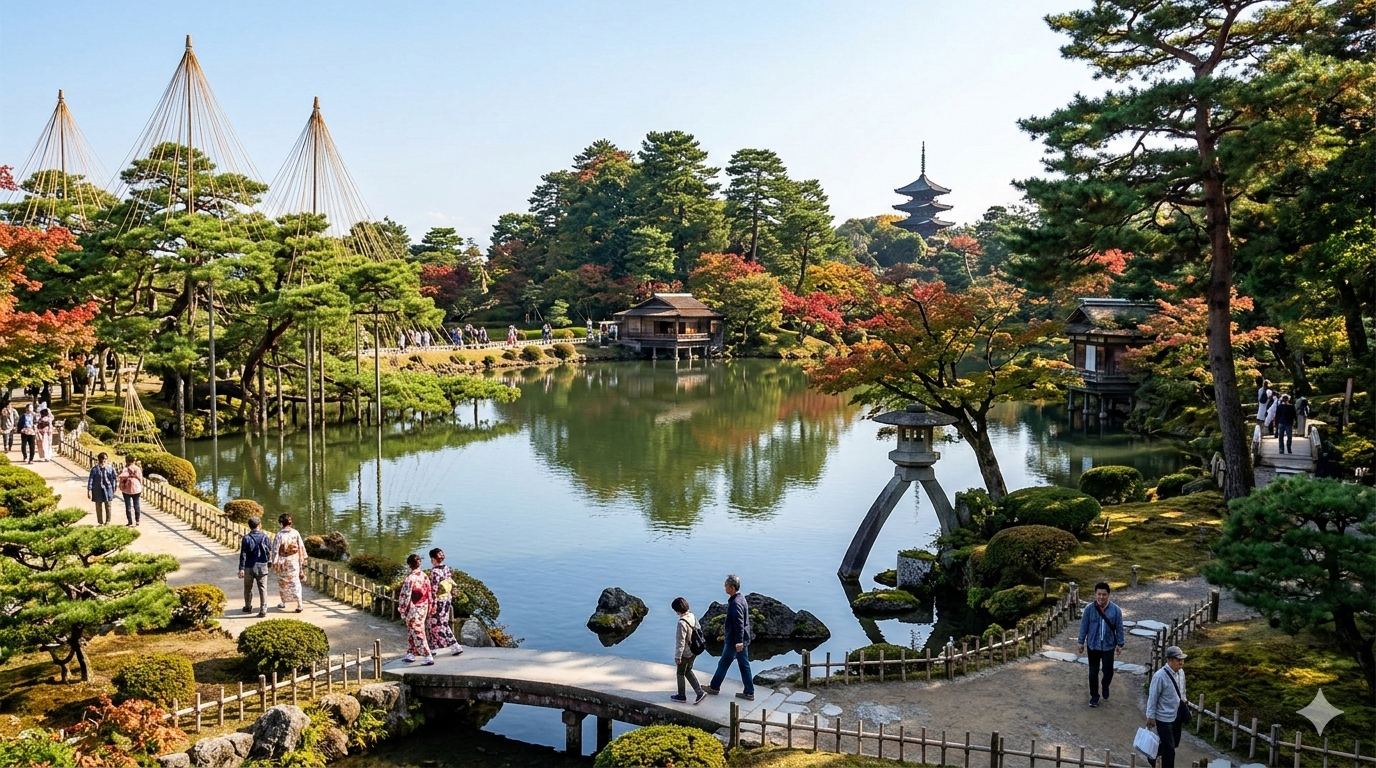
Kenrokuen Garden, located in Kanazawa, Ishikawa Prefecture, is widely regarded as one of Japan’s most beautiful traditional gardens. Its design dates back to the Edo period, and it was originally developed as a strolling garden for the Maeda clan, who ruled the Kaga Domain. The garden is famous for its meticulous landscaping, seasonal beauty, and the careful balance of natural and architectural elements.
Six Attributes of a Perfect Garden
Kenrokuen is named after the concept of “Kenroku,” which means “six attributes.” These include spaciousness, seclusion, artificiality, antiquity, water features, and panoramas. The garden was designed to combine these elements harmoniously, creating a space that feels both natural and carefully crafted.
Bridges, Ponds, and Tea Houses
The garden features multiple ponds and streams connected by stone bridges, each offering a unique viewpoint. These water features are central to the garden’s design, reflecting the surrounding trees and seasonal flowers.
Several traditional tea houses are located within Kenrokuen, allowing visitors to enjoy tea while appreciating the landscape. These structures are built using traditional Japanese architecture, with wooden frames, sliding doors, and tatami mats, blending seamlessly into the garden environment.
Seasonal Beauty and Landscaping
Kenrokuen is renowned for its seasonal landscapes. In spring, cherry blossoms bloom along the paths and around the ponds, while autumn brings fiery red and gold foliage. Winter adds a serene atmosphere with yukitsuri—ropes tied to trees to protect branches from heavy snow, creating a picturesque scene unique to Kanazawa.
Paths and Stone Lanterns
Visitors can stroll along winding paths that lead to different areas of the garden, each with carefully framed views. Stone lanterns are placed strategically throughout Kenrokuen, adding both aesthetic appeal and historical character. Some lanterns, like the Kotoji Toro with its two-legged design, have become iconic symbols of the garden.
Integration with Kanazawa Castle
Kenrokuen is adjacent to Kanazawa Castle, and the garden’s design complements the castle grounds. The spatial arrangement, water features, and trees all contribute to a sense of harmony between natural beauty and the architectural legacy of the Maeda clan.
Visitor Experience
Walking through Kenrokuen offers a peaceful experience where architecture, landscaping, and seasonal elements are carefully balanced. The garden provides multiple viewpoints, each framing ponds, bridges, or tea houses in a way that highlights traditional Japanese garden design principles.
Kenrokuen remains a prime example of Edo-period landscape architecture and is an essential destination for visitors seeking both natural beauty and cultural heritage in Japan.