Nighttime Ohanami: The Beauty of Sakura Under Lantern Light
Have you ever imagined that every spring, Japan transforms into a pink fairy-tale land? Thousands of cherry trees bloom simultaneously, covering city parks, rivers, and streets with soft, delicate petals. This is the moment eagerly awaited by both Japanese people and tourists worldwide: Ohanami, the centuries-old tradition of appreciating cherry blossoms.
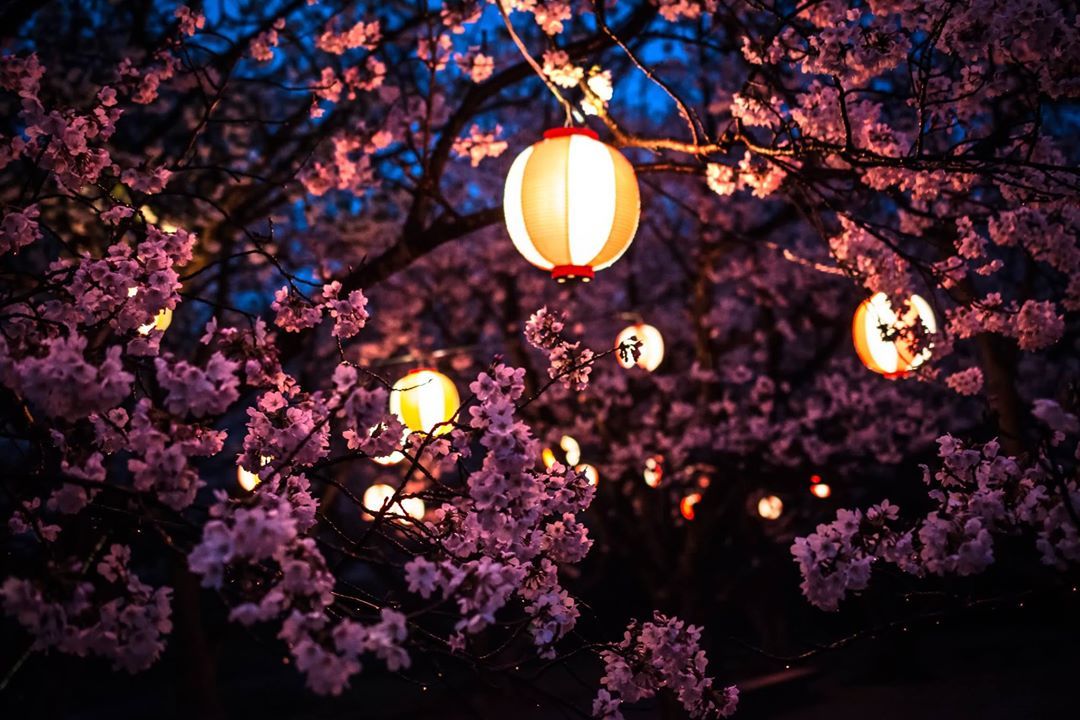
But beyond the daytime bustle of families enjoying picnics, there is another equally enchanting side of Ohanami: nighttime Ohanami, or Yozakura, meaning “night cherry blossoms.” When the sun sets and the sky turns dark, the cherry trees are illuminated by lanterns and soft lights. This creates a magical atmosphere that blends natural beauty with the serenity of night. Under this gentle glow, the blossoms appear not only beautiful but also mysterious and romantic, transporting viewers into a different world.
The Ohanami tradition has deep historical roots, beginning in the Nara period (710–794) and gaining popularity during the Heian period (794–1185). Originally, it was an exclusive activity for Kyoto court nobles, who gathered in palace gardens to write poetry while enjoying plum blossoms (ume) and later cherry blossoms. Over time, this custom spread to the general public, becoming a communal celebration.
Like daytime Ohanami, Yozakura involves gathering in parks, bringing seasonal foods such as sake, and laying out picnic mats. Yet the night adds a deeper aesthetic dimension. Illuminated by lanterns, the cherry blossoms appear calmer and more melancholic. The gentle night breeze makes petals fall slowly, creating a scene that seems to embody the fleeting nature of time—a concept closely tied to mono no aware, the Japanese awareness of transient beauty.
Across Japan, Yozakura is a major attraction during cherry blossom season. Cities like Tokyo, Kyoto, and Osaka have favorite spots for enjoying this spectacle. In Tokyo, Ueno Park and Meguro River are popular locations. At Ueno, hundreds of paper lanterns line the paths, casting soft light on the blossoms above. At Meguro River, modern lights reflect off the water, enhancing the romantic and dramatic atmosphere. In Kyoto, Maruyama Park features ancient cherry trees lit from multiple angles, evoking classic Japanese paintings depicting humans in harmony with nature. Even in small towns or mountain villages, locals hang lanterns around cherry trees, creating an intimate and warm setting.
The beauty of nighttime Ohanami lies not only in its visual appeal but also in the emotional atmosphere it creates. Lanterns cast a dreamlike glow, making petals sparkle like stars fallen to earth. For many Japanese, this moment offers a chance for quiet reflection, gratitude, and contemplation of life’s journey. Sitting beneath the illuminated cherry trees, listening to the wind, and watching petals fall evokes a peaceful, almost meditative feeling. It is also a romantic time: young couples stroll along rivers, friends laugh over warm sake, and families enjoy shared moments. This reflects the gentle side of Japanese culture, emphasizing the connection between humans, nature, and time, celebrated with simplicity and sincerity.
Beyond aesthetics, Yozakura carries spiritual and social significance. In Shinto and Buddhist traditions influencing Japanese views of nature, cherry blossoms symbolize purity, transience, and the ephemeral nature of life. The brief bloom reminds people that everything is temporary, encouraging them to cherish the present. Nighttime Ohanami is therefore not merely about seeing beauty, but appreciating silence, togetherness, and the fleeting nature of life.
In the quiet of night, one can feel a closeness to nature that is hard to experience amidst the modern hustle. Socially, Ohanami dissolves barriers of age, social status, or position, as everyone sits together under the blossoms, sharing food, laughter, and stories—recreating a sense of community often forgotten in big cities.
In modern times, Yozakura incorporates technology without losing tradition. Many parks now use artistic LED lighting to highlight cherry blossoms from multiple angles, creating stunning visual experiences.
Yet despite technological enhancements, the essence of Ohanami remains: appreciating nature’s beauty with a peaceful heart. The festival also fosters cross-cultural connection, as many foreign visitors partake and learn its values. Nighttime Ohanami bridges past and present, natural beauty and modern innovation. As lanterns glow and the evening breeze stirs, cherry blossoms swaying in soft light seem to whisper: true beauty is never loud or showy, but present in quiet moments that may last only briefly yet leave a lasting impression.
Ultimately, Yozakura is not just a celebration of flowers, but a celebration of life itself. Under soft lantern light, every petal symbolizes the passage of time and ephemeral beauty. The tradition teaches us to pause, observe, feel, and appreciate the present. Just as the Japanese uphold simplicity in beauty, nighttime Ohanami reminds us that warmth, togetherness, and harmony with nature are sources of true happiness. Its enduring charm lies not only in visual splendor but also in the emotional serenity it evokes.
As the lanterns dim and the last petals fall, what remains is not sadness, but gratitude—for having been part of a beauty that comes once a year, yet is remembered a lifetime. Philosophical, isn’t it?