Shinto and the Harmonious Spiritual Culture of Japan
What comes to mind when you first hear the name Japan? Discipline, modern technology, orderly cities, and globally influential pop culture. Yet beneath all this progress lies a gentle but deeply rooted spiritual foundation in Japanese life: Shinto. Known as Japan’s indigenous religion, Shinto is not just a belief system; it is a worldview that shapes how people relate to nature, life, and all things around them. In Japanese, “Shinto” means “the way of the gods” or “the way of the sacred spirit.” It is a philosophy that places sanctity and harmony with nature at the center of life. Unlike many other religions, Shinto has no single sacred text or rigid dogma. It lives in everyday practice, in gratitude toward nature, and in rituals marking the various stages of human life. The beauty of Shinto lies in its simplicity: a belief that everything in the world—mountains, rivers, trees, even stones—possesses a sacred spirit worthy of respect.
The roots of Shinto go back to prehistoric Japan, long before foreign religions influenced the archipelago. Early Japanese society depended heavily on nature for survival, leading to a belief system centered on kami, spirits or divine forces inhabiting all things. Kami do not always equate to “gods” in the Western sense; they may be ancestral spirits, mountain or water spirits, or forces inspiring humans to do good. This gives Shinto its unique character, where the spiritual and physical worlds are intertwined. Nature is not merely a backdrop for life but a spiritual partner to be respected. Many Shinto shrines are built in locations with high natural value—at the foot of mountains, on forest edges, or near springs—places where humans can feel closer to kami.
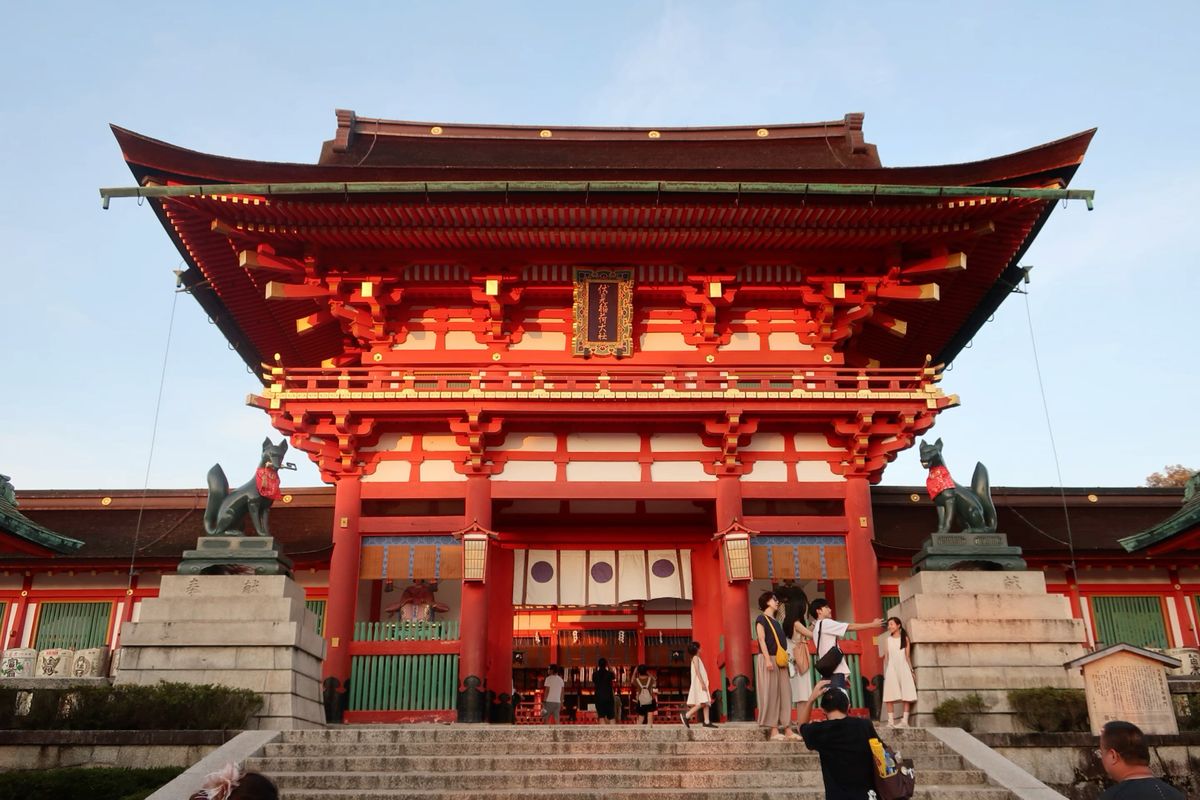
The most visible symbol of Shinto in daily Japanese life is the jinja, or Shinto shrine, of which there are hundreds of thousands across Japan. Each shrine features a characteristic red-orange gate called a torii, marking the transition from the mundane world to sacred space. Visitors perform simple rituals before entering the main area: washing hands and rinsing mouths at a temizuya for purification, then bowing, clapping twice, and praying at the altar. These gestures express respect and awareness of the connection between humans and divine forces. Many shrines also host matsuri, festivals celebrating the seasons and seeking blessings. During matsuri, people gather, dance, enjoy traditional food, and participate in processions with a mikoshi, a portable shrine believed to temporarily house kami. In Shinto, spirituality is not rigid or solemn; it can also be a shared joy that strengthens bonds between humans and between humans and nature.
When Buddhism arrived in Japan in the 6th century from China and Korea, an interesting interaction occurred between the two belief systems. Rather than canceling each other out, Shinto and Buddhism coexisted and complemented one another. This gave rise to the concept of shinbutsu-shūgō, a syncretism of Shinto and Buddhist beliefs. Many shrines and temples were built adjacent to each other, with Shinto shrines honoring kami and Buddhist temples commemorating ancestors or reflecting on life’s meaning. In daily practice, Japanese people might attend Shinto ceremonies for births and weddings, then Buddhist rituals for funerals. The harmony between these teachings reflects a flexible philosophy prioritizing balance over division. Religion is not seen as a boundary but as a path to inner peace, demonstrating Japan’s unique way of nurturing spirituality within diversity without losing its original identity.
In Shinto, moral values are not defined by concepts of sin and reward as in many other religions. Instead, the focus is on purity (harae) and harmony (wa). The goal is not to atone for sin but to restore balance between humans, nature, and spirits. Purification rituals such as misogi, where one washes in a river or waterfall, symbolize cleansing of negative influences—not in a heavy spiritual sense but as renewal of energy and vitality. The principle of purity also manifests in everyday life: maintaining cleanliness, respecting public spaces, and avoiding conflict to preserve social harmony. Values like politeness, respect, and consideration are not just social etiquette but expressions of a spiritual worldview inherited from Shinto. In this sense, Shinto is not merely a religion but a moral foundation shaping the character of modern Japanese society.
Even in today’s fast-paced and individualistic world, Shinto values remain relevant and alive in Japanese life. Many may not formally identify as “Shinto followers,” yet they naturally practice its rituals: visiting shrines at New Year (Hatsumōde), blessing newborns, or praying before important exams. Even amidst the bustle of modern Tokyo, small shrines stand among towering buildings—a reminder that spirituality need not be distant from everyday life. Shinto’s teachings of harmonious human-nature relationships are also reflected in Japanese environmental consciousness, such as recycling practices, reverence for the fleeting cherry blossoms, and the design of gardens that blend aesthetics with tranquility. In every aspect of life, Shinto teaches balance: between tradition and modernity, humans and nature, action and inner calm.
Shinto is not just a legacy of the past but a mirror of how the Japanese view the world. It teaches that life is not a struggle between sacred and profane, but a journey toward ever-renewed harmony. Every sunrise, every falling leaf, every small ceremony at a shrine is a form of reverence for something larger than human existence. In a world often filled with tension and division, Shinto offers a universal message about the importance of balance, appreciation for nature, and beauty in simplicity. Through its subtle and meaningful teachings, Shinto continues to live within Japanese culture, serving as a gentle yet unshakable spiritual path that brings harmony to those who approach life with a calm heart.