The History of Kimono: A Timeless Classic Garment
The origins of the kimono can be traced back more than a thousand years, to the Heian period (794–1185), a time when Japanese arts and culture flourished. Before this era, Japanese clothing was heavily influenced by Chinese styles, particularly long-sleeved garments worn in layered fashion. However, during the Heian period, the Japanese began developing a truly distinctive style, tailored to the local climate and tastes. The introduction of the straight-line-cut technique—cutting fabric in straight lines without following the body’s contours—was a milestone in kimono history. This method was not only efficient but also made it easy to replace or repair fabric. At that time, the kimono was called kosode, meaning “small sleeves,” because its sleeves were narrower than modern kimono. Nobles at the imperial court wore multiple layers, known as junihitoe, sometimes up to twelve layers, signaling social status and refined color sensibilities.
When people think of Japan, one of the most instantly recognizable images is the elegance of the kimono—a traditional garment that embodies beauty, simplicity, and deep cultural meaning. With long fabric wrapped around the body and secured with an obi (wide sash), the kimono has symbolized Japanese elegance and identity for centuries. Although everyday wear of kimono is rare in contemporary Japan, it retains a special place in the nation’s culture and heart. More than just clothing, the kimono represents a historical journey, life philosophy, and aesthetic values passed down through generations. Its long history reflects not only fashion evolution but also social changes and the Japanese perspective on time, propriety, and beauty.
During the Kamakura (1185–1333) and Muromachi (1336–1573) periods, the kimono evolved into everyday attire for not only nobles but also samurai and commoners. Its form became simpler, yet more elegant. Male samurai wore plain, dark-colored kimono to symbolize discipline and honor, while women began experimenting with diverse patterns and colors. During this period, the concept of layering colors, called kasane no irome, emerged—where combinations of colors indicated the season, social status, and even personality. Colors had symbolic meaning: pink represented spring and new life, while dark blue or gray conveyed tranquility and maturity. Thus, the kimono was not merely clothing but a subtle and symbolic medium of communication.
The Edo period (1603–1868) marked the golden age of the kimono. Japan enjoyed long-lasting peace under the Tokugawa Shogunate, during which arts and popular culture flourished. The kimono became a key expression of individuality and social status, especially among wealthy merchants and artists. Patterns became highly intricate, featuring flowers, birds, waves, or clouds, painted by hand using the yuzen technique or embroidered with gold and silver threads. Edo-era kimono artisans were highly skilled, turning each piece of fabric into a work of art. Specialized kimono also emerged: furisode for young unmarried women, with long flowing sleeves, and tomesode for married women, with patterns only at the hem. In Edo, kimono was more than clothing; it symbolized elegance and social prestige, defining one’s identity in society.
Major changes occurred during the Meiji era (1868–1912), when Japan opened to the West and underwent rapid modernization. Western-style clothing was introduced, particularly among government officials and urban workers. Gradually, the kimono shifted from everyday wear to formal attire for special occasions. Yet it was never abandoned; rather, it became a national cultural symbol to be preserved. The Japanese government even encouraged wearing kimono at official ceremonies to demonstrate national identity amidst globalization. Women continued to wear kimono at weddings, coming-of-age ceremonies (Seijin Shiki), and traditional festivals like Hanami and Obon. Kimono also inspired modern fashion designers who sought to blend traditional elements with contemporary styles.
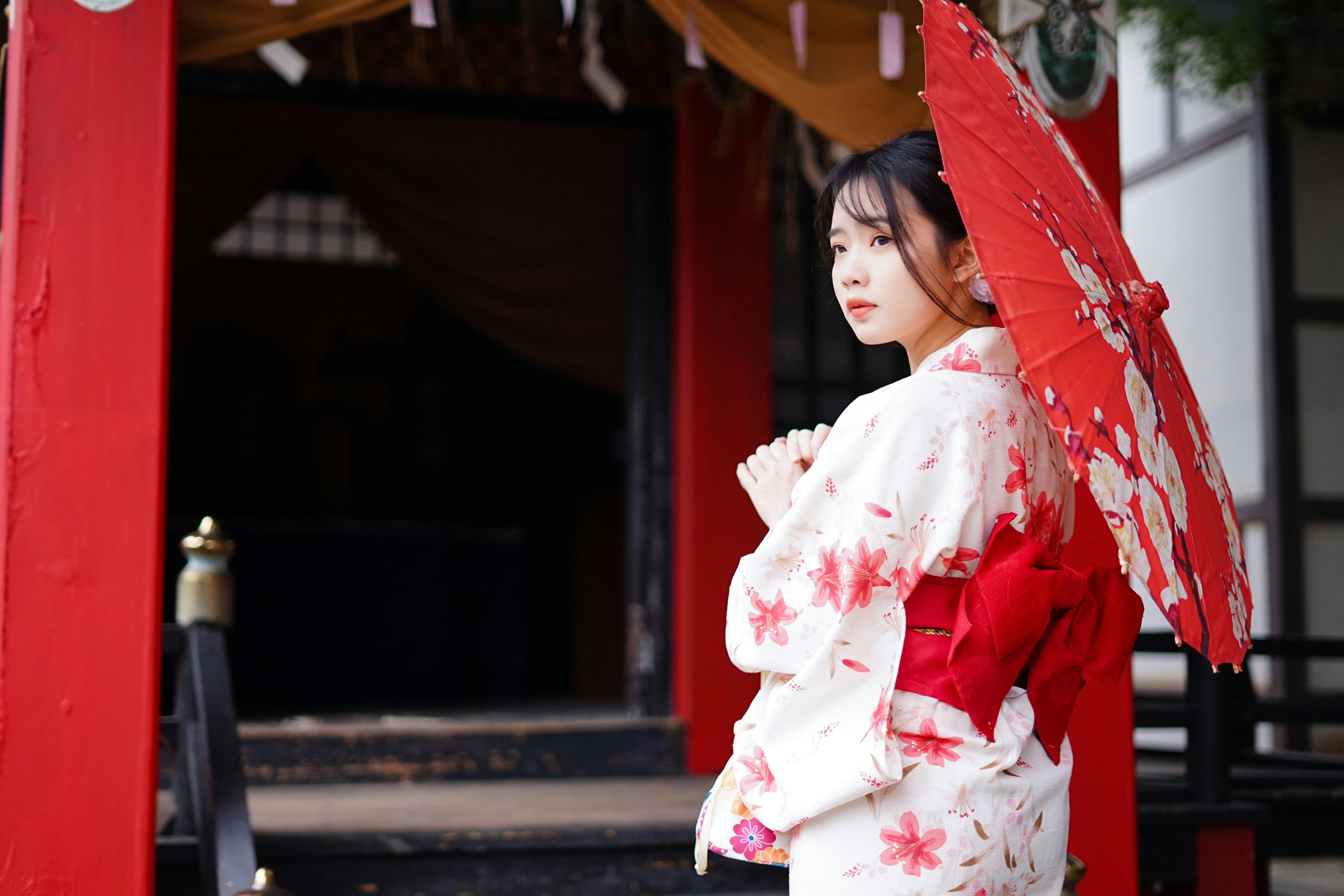
Today, the kimono retains its timeless appeal. Although daily use has declined, interest has grown in cultural and tourism contexts. Many tourists in Kyoto or Tokyo choose to wear kimono to take photos in historic streets, while young Japanese increasingly view kimono as a form of self-expression and cultural pride. Communities and schools teach proper kimono-wearing techniques, a process requiring skill and precision. Wearing a kimono is not merely putting on clothes but participating in a ritual of politeness and mindfulness. Folding the fabric, tying the obi, and selecting colors and patterns all follow specific rules and carry meaning. In this process, the kimono teaches values rarely found in modern fashion: patience, awareness, and appreciation for detail.
However, the kimono industry faces significant challenges. Skilled artisans are dwindling, and high-quality silk is expensive, making authentic kimono difficult for the general public to afford. Nevertheless, preservation efforts continue, led by both the government and creative communities. Young Japanese designers are revitalizing the kimono with modern touches, incorporating lighter fabrics, experimental colors, and practical styles to appeal to a new generation. Fashion shows and cultural exhibitions abroad introduce the kimono as a symbol of universal beauty. The kimono is now not only a Japanese heritage but also a global fashion inspiration valuing tradition and sustainability.
More than just attire, the kimono reflects Japan’s historical journey and soul. Every fold, pattern, and color carries stories of the past—from Heian court elegance and samurai spirit to Edo creativity. The kimono also conveys a simple yet profound life philosophy: true beauty need not be extravagant, and clothing can serve as a bridge connecting people with the values they uphold. In today’s fast-paced world, the kimono reminds us to slow down, appreciate the process, and find beauty in every detail. Perhaps that is why, despite the passage of time, the kimono endures as a classic garment—an eternal symbol of elegance, honor, and the refined spirit of Japan.